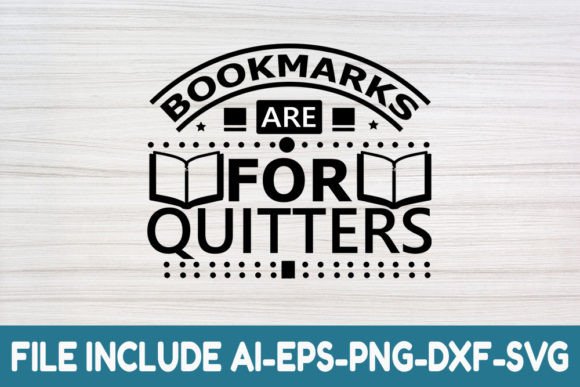
Bookmarks Are for Quitters - Reading Svg Review
As someone who spends more time staring at stitch charts and fabric swatches than watching television, I have developed a fairly strict filter for digital assets. The market is flooded with generic clipart and poorly vectorized shapes that look charming on a screen but fall apart under the needle. That is why I approach every new download with a healthy dose of skepticism. When I pulled Bookmarks Are for Quitters - Reading Svg into my digitizing software, I wasn’t just looking for a cute quote; I was evaluating whether this design had the structural integrity and visual punch to survive the transition from a digital file to a tangible, wearable piece of art.
The immediate first impression of this design is one of relatable wit paired with clean, modern aesthetics. In the world of handmade goods, humor often serves as the hook that stops a scroll on Etsy or catches an eye at a craft fair. This particular phrase taps directly into the identity of the "book lover," a demographic that is notoriously loyal and passionate about their hobbies. Visually, the layout feels balanced. It isn’t cluttered with excessive decorative elements that might compete with the text. Instead, it relies on strong typography and a clear focal point. For an embroidery designer, this simplicity is a blessing. It means fewer thread changes, less risk of tangling, and a cleaner final product that looks professional rather than amateurish.
Real-World Application: From Screen to Stitch
I decided to put this design through its paces by envisioning it in a few specific real-life scenarios. My primary test case was a custom embroidered tote bag for a local bookstore gift shop. Tote bags are a staple for Etsy sellers and small business owners, but they present unique challenges. The canvas can be thick, and the surface area is large enough that any misalignment or poor stitch density becomes glaringly obvious.
When I mocked up Bookmarks Are for Quitters - Reading Svg on a heavy-duty cotton canvas, the contrast was striking. The design’s bold lines translated well into what would likely be a combination of satin stitches for outlines and fill stitches for background elements. I imagined using a deep navy thread for the text against a natural oatmeal-colored bag. The result felt sophisticated yet playful. It didn’t scream "cheap novelty item"; instead, it looked like a curated boutique product. This distinction is crucial for anyone looking to build brand consistency and command higher price points for their handmade products.
Another scenario I considered was personalization for a baby shower gift. While the phrase might seem slightly edgy for a newborn, it is perfect for the parents—the tired ones who are trying to reclaim their hobby. Placing this design on a soft muslin burp cloth or a hooded towel required a softer touch. Here, the design’s scalability became important. Because the source files include SVG, PNG, EPS, and DXF formats, resizing the graphic for a smaller hoop size was seamless without losing resolution. However, I had to be careful not to over-stitch the details. On delicate fabrics, too much density can cause puckering, so I opted for a lighter thread count and a high-quality cut-away stabilizer to ensure the embroidery project remained flat and comfortable against skin.
Where Caution Is Required
While this design is versatile, it is not without its pitfalls. Embroidery is a physical medium, and even the best vector graphics can suffer if the underlying technical execution is flawed. I strongly advise testing this design on scrap fabric before committing to your final finished product. Pay close attention to the corners of the letters. If the original vector paths have sharp angles, your machine might struggle with the transition, leading to thread breaks or unsightly knots.
Fabric texture also plays a massive role in how this design will render. On a smooth, tightly woven fabric like twill for a cap or a crisp poplin for a shirt, the design will shine. But on textured fabrics like chunky knits, fleece, or raw denim, the fine details may get lost. In these cases, you might need to simplify the design or increase the spacing between stitches to maintain clarity. Additionally, if you plan to use this for custom apparel like sweatshirts, consider the stretch of the material. A dense fill stitch can restrict movement and feel stiff. Using a tear-away stabilizer during stitching and then removing it carefully can help mitigate bulkiness.
Color contrast is another critical factor. Dark fabrics require light threads, and vice versa. If you attempt to stitch dark thread on a dark background without a contrasting outline, the design will disappear. I recommend running a black-and-white mockup of the design to check legibility before purchasing your threads. This simple step can save you hours of rework and prevent customer dissatisfaction due to poor visibility.
Impact on Product Value and Customer Trust
In the competitive landscape of online marketplaces, presentation is everything. Customers cannot touch the product, so they rely entirely on images and descriptions to gauge quality. A well-executed embroidery design signals professionalism. When a buyer sees a clean, precise stitch pattern on a tote bag design or a sweatshirt embroidery, they subconsciously trust that the maker cares about detail. This trust translates directly into sales and positive reviews.
Bookmarks Are for Quitters - Reading Svg offers high recognition value. Book lovers identify instantly with the sentiment. This emotional connection makes the item highly giftable, which is a key driver for holiday sales and special occasion purchases. Whether it is intended as a personalized gift for a teacher, a mentor, or a fellow avid reader, the design carries a message that resonates. For commercial embroidery businesses, this means lower marketing effort is required because the product sells itself through its relatability.
Furthermore, the inclusion of multiple file formats—SVG, PNG, EPS, and DXF—adds significant utility. These design assets allow for flexibility beyond just machine embroidery. You can use the SVG for vinyl cutting on mugs or laptops, the PNG for digital mockups on social media, and the DXF for laser cutting wood signs. This versatility increases the perceived value of the purchase, making it a smart investment for craft business owners who want to maximize the ROI on a single design acquisition.
Practical Designer Notes for Success
- Test First: Always run a test stitch on a scrap piece of the actual fabric you intend to use. Check for tension issues and stitch alignment.
- Check Density: Review the stitch density in your software. If the design is too dense for the fabric weight, reduce the number of passes or adjust the underlay stitches.
- Stabilizer Choice: Use the appropriate stabilizer for your fabric type. Heavy fabrics need sturdy backing, while delicates need gentle support.
- Licensing: Confirm the licensing terms before selling finished items. Ensure you have the right to use this digital embroidery file for commercial purposes.
- Thread Quality: Invest in high-quality polyester or rayon threads. Cheap threads can break easily and lack the sheen that elevates a handmade product.
Ultimately, Bookmarks Are for Quitters - Reading Svg is a solid addition to any designer’s library. It balances humor with aesthetic appeal, making it suitable for a wide range of applications from holiday embroidery gifts to everyday small shop products. By paying attention to the technical details of stitching and fabric selection, you can transform this digital asset into a premium, marketable reality that customers will love.